UK · window condensation / Decision guide
Will window film stop condensation? Check where it goes first
Window film is not one treatment. A clear sheet fitted to the frame creates an air gap; a low-emissivity or solar-control film sticks directly to the glass. Their effects on condensation can differ. Before buying either, establish where the water is and whether the room has adequate ventilation.
For a wet window, the useful first decision is:
- Water between the panes of a sealed double-glazed unit: arrange a glazing assessment, rather than buying film.
- Water on the room-facing surface: investigate moisture, ventilation and surface temperature before choosing an insulating treatment.
- A film advertised mainly for tinting, solar control or clear visibility: do not assume it will cure condensation.
This guide compares the constructions and the questions to ask. It is based on published guidance, not a hands-on film test.
First locate the water
From a safe position inside, wipe a small patch of the room-facing glass. If that clears the droplets, they are on the room side. If mist remains beyond the surface, do not assume it is a coating mark or something a film can cover successfully. Avoid leaning outside to investigate an inaccessible pane.
The Glass and Glazing Federation distinguishes room-side, outside-surface and sealed-cavity condensation. Its consumer guide identifies moisture inside a sealed insulating glass unit as unit failure. Room-side condensation instead reflects the relationship between glass temperature and moisture in the room. Outside condensation can occur on energy-efficient glazing under suitable weather conditions. GGF condensation guide, pages 11–12
An added secondary pane or film creates a different cavity from the factory-sealed space inside double glazing. Tell an installer which space is misting. A photograph showing the whole window, followed by one showing the affected surface, is more useful than calling all three problems “wet windows”.
Frame-mounted film creates another surface
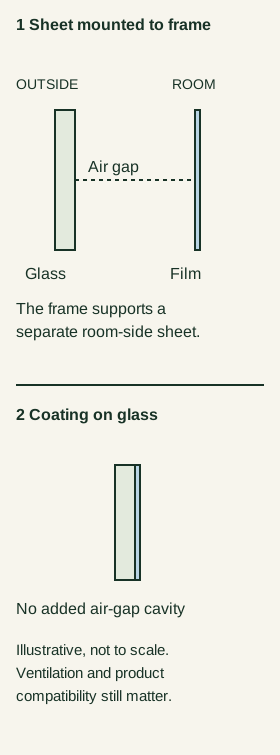
Look for instructions showing tape around the frame and a sheet stretched across the opening, with space between it and the original glass. This is the temporary secondary-glazing approach often called shrink film. It is not applied flat against the pane.
For example, tesa's UK insulation-film page describes an insulating air cushion, fitting with double-sided tape and tightening with a hairdryer. The product is described as designed for single-pane windows, with reduced condensation among the manufacturer's claims. That establishes its intended use, not a guarantee for your room or evidence that every similar kit performs equally. tesa insulation film
Before considering a kit, check your window type, the frame material and finish, the usable mounting area and how you will open the window afterwards. Ask how the adhesive is removed, particularly on painted or fragile surfaces. Check the exact instructions rather than assuming a product demonstrated on single glazing is suitable for your older double glazing.
Most importantly, do not seal over a ventilation route. Energy Saving Trust advises against adding draught-proofing where ventilation is inadequate or a condensation problem already exists. If the film also seals a draughty opening, resolve that question before fitting it. Energy Saving Trust damp guidance
Scroll the diagram sideways to read all labels.
Direct-to-glass film needs a different check
A film applied directly to glass may change solar gain, glare or heat transfer without creating a secondary air gap. An insulating claim therefore does not, by itself, establish a condensation benefit.
There is a useful product-specific warning. In its European CC75 product bulletin, effective April 2020, 3M says Thinsulate Climate Control film can lower the glass surface temperature and increase condensation in humid conditions. It advises against applying that product where condensation already occurs. 3M CC75 product bulletin, section 4.3
That document is a dated example, not a current purchasing recommendation. It repeats a warning in 3M's October 2019 technical bulletin; we could not establish whether a later revision replaces either document or confirm current UK supply. Do not treat its continued online availability as proof of either.
The broader caution is supported by Efficient Window Coverings: an innermost exposed low-e layer can increase condensation potential, and applied film does not reduce air leakage. This is not a claim that all low-e films worsen condensation. The coating, glazing construction and conditions matter. Applied-film guidance
For any proposed direct-to-glass product, ask the supplier to identify the exact film and confirm compatibility with your glazing, its existing coatings and warranty. Ask specifically about existing room-side condensation, not just energy savings.
Anti-fog claims answer another question
If a treatment promises clearer visibility or less misting, ask what that means in practice. Is it meant to change the appearance of moisture, add insulation, or do something else? A visibility claim alone does not establish that the window will be warmer, that less moisture will enter the room, or that a failed sealed unit will be repaired.
Avoid transferring advice for a bathroom mirror, car windscreen or visor to domestic glazing without explicit manufacturer approval for that use.
Decide whether to buy anything yet
If room-side water keeps returning, record when it appears and whether it affects one window or several. Deal with water accumulating on the sill while investigating the cause. Energy Saving Trust recommends reducing moisture production, using extraction and keeping ventilation clear; persistent damp needs its underlying cause addressed. Film should not conceal a leak, damaged frame or recurring mould. Damp causes and practical measures
Once ventilation and condition have been considered, frame-mounted film may be worth assessing for a compatible single-glazed window. Direct-to-glass film needs product-specific condensation advice. If the water is inside a sealed glazing unit, put the film purchase aside and ask about the unit itself.
The useful question at the checkout is not simply “Does window film work?” It is “What will this particular film change on this particular window, and is that the cause of the water I can see?”